
Pregnancy Weight Gain Calculator
Track your healthy pregnancy weight gain with our free calculator. Get a personalized weekly weight plan based on your pre-pregnancy BMI and IOM guidelines.


| RESULT | |
|---|---|
| Recommended weight range | 172.7 - 177.7 lbs |
| Recommended weight range when delivering | 190.5 - 200.3 lbs |
| Your BMI before pregnancy | 22.6 kg/m2 |
Week 0
Week 5
Week 10
Week 15
Week 20
Week 25
Week 30
Week 35
Week 40
| Week | Recommended Weight Range | Recommended Weight Gain |
|---|---|---|
| Week 1 | 165.3 - 165.3 lbs | 0.0 - 0.0 lbs |
| Week 2 | 165.44 - 165.75 lbs | 0.09 - 0.40 lbs |
| Week 3 | 165.5 - 166.0 lbs | 0.2 - 0.7 lbs |
| Week 4 | 165.6 - 166.4 lbs | 0.3 - 1.1 lbs |
| Week 5 | 165.7 - 166.8 lbs | 0.4 - 1.5 lbs |
| Week 6 | 165.8 - 167.1 lbs | 0.5 - 1.8 lbs |
| Week 7 | 165.9 - 167.5 lbs | 0.6 - 2.2 lbs |
| Week 8 | 165.9 - 167.9 lbs | 0.6 - 2.6 lbs |
| Week 9 | 166.0 - 168.2 lbs | 0.7 - 2.9 lbs |
| Week 10 | 166.1 - 168.6 lbs | 0.8 - 3.3 lbs |
| Week 11 | 166.2 - 169.0 lbs | 0.9 - 3.7 lbs |
| Week 12 | 166.3 - 169.3 lbs | 1.0 - 4.0 lbs |
| Week 13 | 166.4 - 169.7 lbs | 1.1 - 4.4 lbs |
| Week 14 | 167.3 - 170.9 lbs | 2.0 - 5.5 lbs |
| Week 15 | 168.2 - 172.0 lbs | 2.9 - 6.7 lbs |
| Week 16 | 169.1 - 173.1 lbs | 3.8 - 7.8 lbs |
| Week 17 | 170.0 - 174.3 lbs | 4.7 - 8.9 lbs |
| Week 18 | 170.9 - 175.4 lbs | 5.6 - 10.1 lbs |
| Week 19 | 171.8 - 176.5 lbs | 6.4 - 11.2 lbs |
| Week 20 | 172.7 - 177.7 lbs | 7.3 - 12.3 lbs |
| Week 21 | 173.6 - 178.8 lbs | 8.2 - 13.4 lbs |
| Week 22 | 174.5 - 179.9 lbs | 9.1 - 14.6 lbs |
| Week 23 | 175.3 - 181.0 lbs | 10.0 - 15.7 lbs |
| Week 24 | 176.2 - 182.2 lbs | 10.9 - 16.8 lbs |
| Week 25 | 177.1 - 183.3 lbs | 11.8 - 18.0 lbs |
| Week 26 | 178.0 - 184.4 lbs | 12.7 - 19.1 lbs |
| Week 27 | 178.9 - 185.6 lbs | 13.6 - 20.2 lbs |
| Week 28 | 179.8 - 186.7 lbs | 14.4 - 21.4 lbs |
| Week 29 | 180.7 - 187.8 lbs | 15.3 - 22.5 lbs |
| Week 30 | 181.6 - 189.0 lbs | 16.2 - 23.6 lbs |
| Week 31 | 182.5 - 190.1 lbs | 17.1 - 24.7 lbs |
| Week 32 | 183.4 - 191.2 lbs | 18.0 - 25.9 lbs |
| Week 33 | 184.2 - 192.3 lbs | 18.9 - 27.0 lbs |
| Week 34 | 185.1 - 193.5 lbs | 19.8 - 28.1 lbs |
| Week 35 | 186.0 - 194.6 lbs | 20.7 - 29.3 lbs |
| Week 36 | 186.9 - 195.7 lbs | 21.6 - 30.4 lbs |
| Week 37 | 187.8 - 196.9 lbs | 22.5 - 31.5 lbs |
| Week 38 | 188.7 - 198.0 lbs | 23.4 - 32.6 lbs |
| Week 39 | 189.6 - 199.1 lbs | 24.2 - 33.8 lbs |
| Week 40 | 190.5 - 200.3 lbs | 25.1 - 34.9 lbs |
There was an error with your calculation.
Last updated: June 3, 2026
Table of Contents
- Recommended Weight Gain During Pregnancy
- Distribution of Pregnancy-Related Weight Gain²
- Potential Health Risks Associated with Incorrect Weight Increase
- What to Eat During Pregnancy?
- Foods and Drinks to Avoid
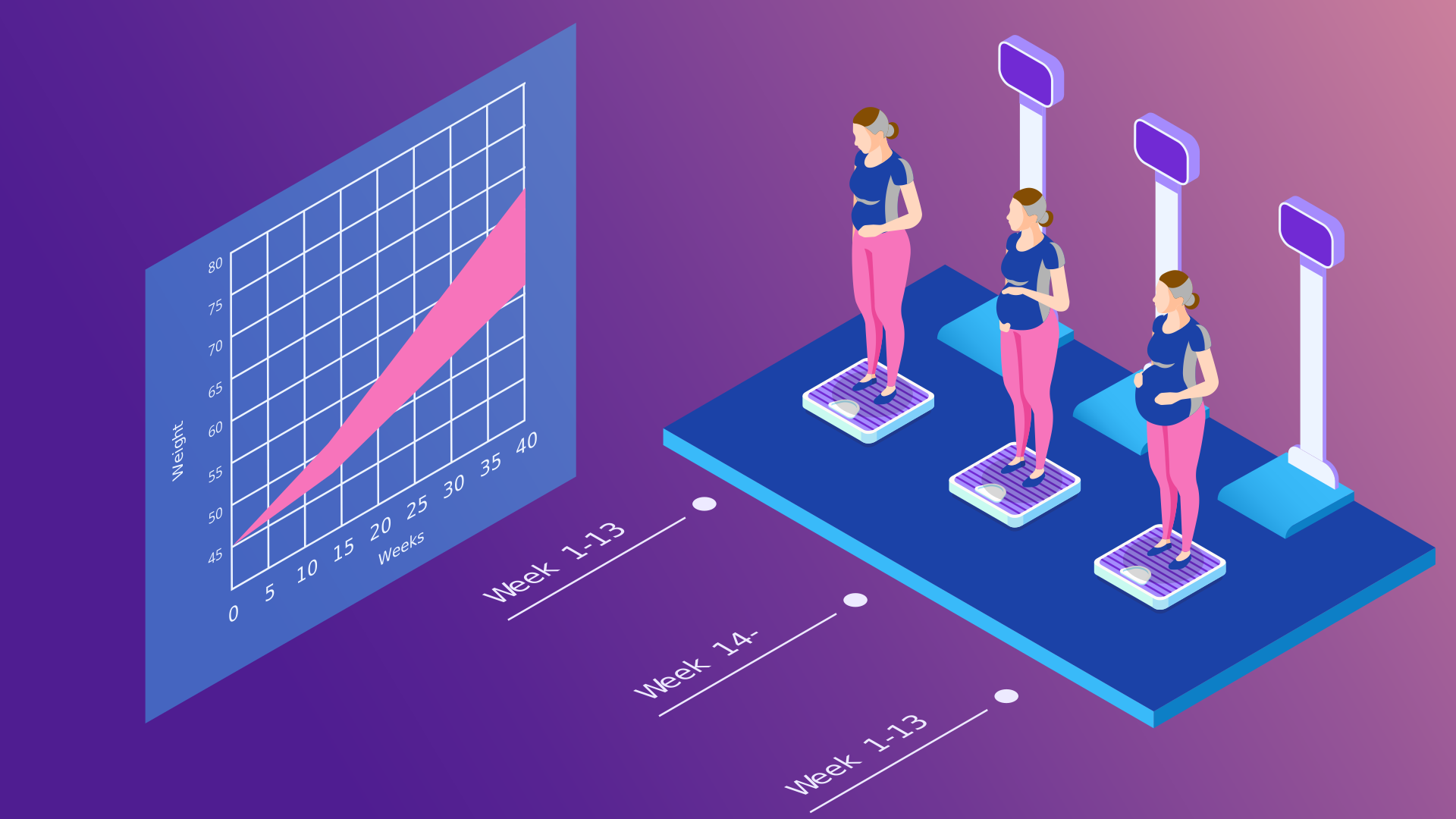
Our Pregnancy Weight Gain Calculator helps you track and chart healthy weight gain during your pregnancy, utilizing official guidelines established by the Institute of Medicine (IOM).
Recommended Weight Gain During Pregnancy
During pregnancy, a woman's body undergoes incredible transformations. A natural and essential part of this journey is an increase in body weight, which ensures your developing baby receives the vital nutrients needed to thrive. This weight gain also helps build the necessary energy reserves your body will need for postpartum recovery and breastfeeding.
Gaining weight is a normal, healthy part of expecting. Studies based on pre-pregnancy body mass index (BMI) demonstrate that staying within specific weight gain ranges produces the most positive health outcomes for both mother and baby¹.
As a general guideline, healthcare professionals recommend that pregnant women gain just 1 to 4 pounds during the first trimester (the first three months), followed by about 1 pound per week for the remainder of the pregnancy. You can achieve this healthy 1-pound weekly weight gain by consuming ~ 300 extra calories daily². This is roughly equivalent to enjoying a baked potato with two ounces of lean meat and an apple. Alternatively, you could simply add an extra healthy sandwich and a glass of milk to your daily routine.
The following table outlines the recommended weight increase during pregnancy as provided by the Institute of Medicine. These guidelines are categorized based on a woman's BMI before pregnancy.
Recommendations for overall weight increase during pregnancy, based on the individual’s BMI before becoming pregnant¹
| Prepregnancy BMI (kg/m²) | Category | Total Weight Gain Range | Total Weight Gain Range for Pregnancy with Twins |
|---|---|---|---|
| <18.5 | Underweight | 28-40 lbs | |
| 18.5-24.9 | Normal Weight | 25-35 lbs | 37-54 lbs |
| 25.0-29.9 | Overweight | 15-25 lbs | 31-50 lbs |
| >30.0 | Obese | 11-20 lbs | 25-42 lbs |
Please remember that these are broad guidelines; every woman’s body and weight growth rate is unique. Always consult with your healthcare provider or obstetrician for personalized advice tailored to your specific health needs.
It is also important to note that the extra pounds gained are not solely from the baby's growth. A significant portion of healthy pregnancy weight gain comes from the development of supportive maternal tissues, increased fluid volume, and fat stores meant to prepare the body for breastfeeding. The breakdown below illustrates how this weight is typically distributed.
Distribution of Pregnancy-Related Weight Gain²
| Enlarged breasts | 1-3 pounds |
| Enlarged uterus | 2 pounds |
| Placenta | 1.5 pounds |
| Amniotic fluid | 2 pounds |
| Increased blood volume | 3-4 pounds |
| Increased fluid volume | 2-3 pounds |
| Fat stores | 6-8 pounds |
Potential Health Risks Associated with Incorrect Weight Increase
Managing your weight during pregnancy is crucial, as both inadequate and excessive weight gain carry significant health risks. Gaining too little weight can compromise fetal development, increasing the likelihood of low birth weight and raising the risk of premature delivery.
Conversely, gaining more than the recommended weight can increase your risk of gestational diabetes, high blood pressure (hypertensive disorders), and delivery complications. It also raises the chances of requiring a cesarean section (C-section), delivering a larger-than-average baby (macrosomia), and struggling with prolonged postpartum weight retention. Striking a healthy balance is essential to safeguard the well-being of both mother and child, underscoring the importance of carefully monitoring your pregnancy weight.
What to Eat During Pregnancy?
A mother's dietary choices during pregnancy profoundly impact her baby's development. While cultural diets vary widely, and there is no magic formula to guarantee a perfect outcome, prioritizing a nutrient-rich pregnancy diet is essential.
Rather than obsessing over rigid rules, focus on a well-rounded diet featuring fresh fruits, vegetables, lean proteins, healthy fats, and whole grains. Certain nutrients are particularly vital for the healthy growth and development of your baby, which we highlight below.
Calcium
Calcium is critical for the daily functioning of your muscular, circulatory, and nervous systems. It is also the building block for your baby's developing bones and teeth. Excellent dairy-based sources include milk, cheese, and yogurt. If you are lactose intolerant or prefer plant-based options, you can get ample calcium from fortified alternatives, salmon, spinach, kale, and broccoli.
Folic acid and folate
Folate is a naturally occurring B vitamin, while folic acid is its synthetic counterpart. Adequate intake is one of the most effective ways to reduce the risk of severe birth abnormalities, specifically neural tube defects and anomalies of the brain and spinal cord. Studies also suggest that folate helps lower the risk of premature birth.
You can boost your intake through prenatal supplements and fortified foods. Natural sources of folate include citrus fruits (like oranges), dark leafy greens (such as spinach), and dried beans or peas.
Protein
Protein is indispensable for your baby’s cellular growth and your own changing body. Lean meats, poultry, eggs, fish, beans, peas, almonds, and soy products are all outstanding sources of high-quality protein to support a healthy pregnancy.
Iron
Iron plays a pivotal role in the production of hemoglobin, the protein in red blood cells that carries oxygen to your developing baby. During pregnancy, your blood volume expands, meaning you need double the usual amount of iron.
Failing to meet this demand can lead to iron-deficiency anemia, causing severe maternal fatigue and increasing the risk of premature birth. To maintain healthy iron levels, consume lean red meat, poultry, fish, iron-fortified cereals, and beans.
Pro tip: You can maximize your body’s iron absorption by pairing plant-based iron sources with foods rich in Vitamin C, such as citrus fruits or bell peppers. This is because iron from non-animal sources is most readily absorbed when combined with Vitamin C.
Vitamin D
Working in tandem with calcium, Vitamin D helps build your infant's developing bones and teeth while maintaining your own bone strength. Great sources include fortified milk, fortified orange juice, fatty fish like salmon, and egg yolks.
The vast majority of the essential nutrients described above are available as dietary supplements, and taking high-quality prenatal vitamins is highly recommended throughout pregnancy. It is always best to discuss your diet with a qualified healthcare professional to determine which prenatal vitamins and specific supplements you need.
Foods and Drinks to Avoid
Knowing what to exclude from your pregnancy diet is just as important as knowing what to include. Certain foods and beverages can pose severe risks to fetal development and maternal health.
High-mercury seafood should be strictly avoided. Generally, larger, older predatory fish contain the highest mercury levels. The Food and Drug Administration (FDA) strongly advises pregnant women to avoid swordfish, shark, tilefish (slab fish), and king mackerel. Instead, opt for safer, low-mercury seafood like salmon, shrimp, catfish, pollock, cod, tilapia, and light canned tuna.
Expecting mothers should also steer clear of raw, undercooked, or potentially contaminated foods. This includes sushi, sashimi, and raw shellfish (like oysters, clams, and scallops), as well as raw or undercooked meat, poultry, and eggs. Bacteria found in these foods pose a severe threat of food poisoning (such as Listeria and Salmonella) to a developing baby.
Health experts also strongly recommend avoiding unpasteurized foods and beverages, including certain soft cheeses and raw dairy products, due to the high risk of bacterial contamination.
Raw sprouts (including alfalfa, clover, radish, and mung bean) are highly susceptible to bacterial contamination. They must be thoroughly cooked before consumption rather than eaten raw.
It is highly recommended to limit your caffeine intake, as it can cross the placenta and its long-term effects on the developing fetus are not entirely understood. Similarly, because herbal teas lack extensive safety research for pregnant women, it is best to consult your doctor before consuming them.
Pregnant women must abstain from alcohol entirely. There is no known safe amount of alcohol consumption during pregnancy. Drinking while carrying a child drastically increases the risk of stillbirth and Fetal Alcohol Syndrome (FAS), which can cause facial deformities, stunted growth, and severe intellectual disabilities.
Smoking before, during, and after pregnancy poses catastrophic risks to both mother and child. It is linked to preterm delivery, fetal mortality, placental complications, severe maternal hemorrhaging, and the need for a C-section.
Furthermore, maternal smoking drastically increases the baby's risk of Sudden Infant Death Syndrome (SIDS), altered lung and brain stem development, and cerebral palsy. Research also indicates that smoking during pregnancy increases the likelihood of childhood and adolescent obesity, which carries its own long-term health consequences for mortality and morbidity.
This list does not cover every food or activity women should avoid while pregnant. Adhering to these dietary safety guidelines simply gives your baby the best possible start in life. If you have specific questions or concerns about your diet, always speak directly with your obstetrician or a qualified medical expert.