
Metronome
Improve your rhythm with our free online metronome. Easily set your BPM, adjust time signatures, and elevate your music practice. Perfect for all musicians!


LARGO - ADAGIO
60
There was an error with your calculation.
Last updated: June 3, 2026
Table of Contents
- Who should practice with a metronome
- How can you include a digital metronome in your practice routine
- Getting started
- A Deeper Look at the Invention and Evolution of the Metronome
- Can a metronome make you a better musician
- Using a Metronome Outside of Music Rehearsals
- Conclusion
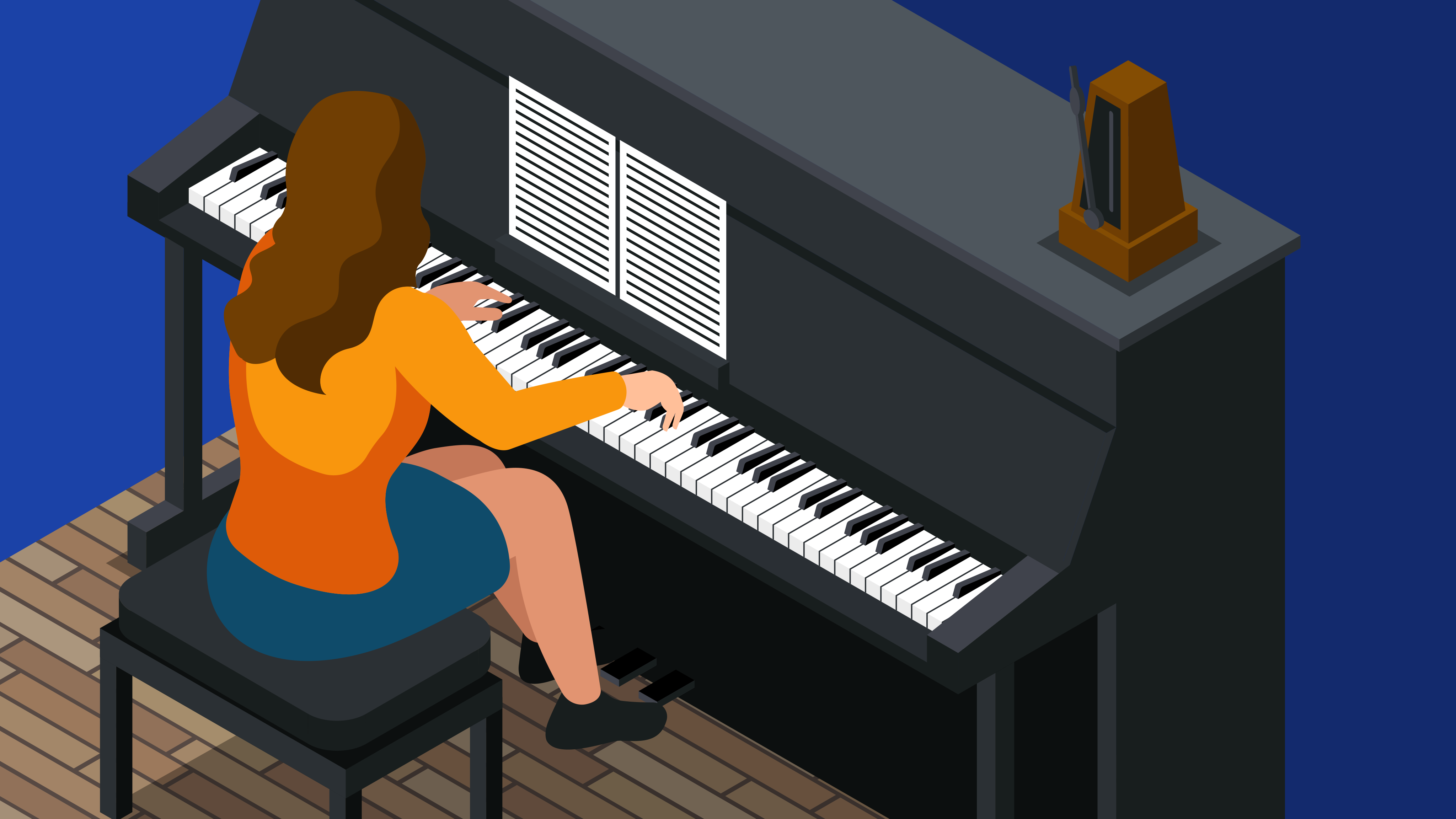
A metronome, despite being one of the most valuable tools in a musician's arsenal, is frequently underappreciated. While playing along to a click track can seem daunting at first, it remains one of the absolute best methods for enhancing your timing, rhythm, and accuracy. In this guide, we'll explore the undeniable benefits of practicing with a metronome and show you how using a free online metronome can rapidly elevate your musical skills.
Who should practice with a metronome
No matter what instrument you play, practicing with a metronome will help you build confidence, solidify your internal sense of rhythm, and improve your overall coherence. It isn't just a practice tool for drummers; guitarists, bassists, pianists, and wind players all rely on metronomes to sharpen their chops—especially when preparing to play in an ensemble.
Even vocalists and rappers frequently use a digital metronome to lock in their phrasing and develop razor-sharp rhythmic delivery. A solid grasp of time and meter is an essential foundation for anyone looking to play in a band, perform live, or record music in a studio setting.
How can you include a digital metronome in your practice routine
There are countless creative ways to incorporate a click into your daily sessions, and a free online metronome is by far one of the most accessible options. To integrate this powerful online tool into your routine, simply dial in your desired tempo, press play, and start jamming. It’s truly that easy!
Getting started
Using an online metronome is a highly straightforward process. First, you need to select your desired speed in BPM (Beats Per Minute), which dictates exactly how fast the click will sound. Essentially, the BPM determines the tempo of your music. Next, you need to set the time signature, which governs how you count the rhythm and divide the musical bars.
One of the most common time signatures is 4/4 time. This means there are four beats per measure, and the quarter note gets the beat. You can think of it as continuously counting to four to easily keep track of the tempo. While there are plenty of complex and odd time signatures out there, beginners should concentrate on mastering 4/4 time first.
Just as a painter uses a canvas to frame a portrait, a musician uses a time signature as a structural framework to allocate notes, accents, and rhythmic phrasing within a song. Working within these rhythmic boundaries actually sparks creativity. Learning how to confidently navigate timing and beat subdivisions is a fantastic way to start thinking outside the box!
For example, a standard drum beat typically places the bass drum on beats 1 and 3, while the snare lands on beats 2 and 4. However, there are no strict rules in music! Once you understand the core concepts of counting and practicing to a metronome tool, you can craft your own unique patterns and experiment with creative note placements.
A Deeper Look at the Invention and Evolution of the Metronome
The metronome boasts a fascinating history dating back to the early 19th century. The original concept was brought to life in 1814 by Dutch inventor Dietrich Nikolaus Winkel. His creation was a mechanical device capable of producing a steady, audible pulse to help musicians maintain a consistent tempo during practice.
German inventor Johann Nepomuk Maelzel, a contemporary of Winkel, recognized the immense potential of this tool and refined its design. In 1816, he patented his enhanced version, aptly named "Maelzel's Metronome." This upgraded model featured a precise scale that allowed musicians to set exact tempos measured in beats per minute (BPM), making it far more practical and accessible.
Before this groundbreaking invention, musicians struggled to maintain a consistent tempo. They had to rely on subjective methods—like tapping their feet or watching swinging pendulums—which severely lacked precision. The introduction of the mechanical metronome provided a reliable, accurate tempo reference, empowering musicians to develop a flawless internal clock.
Maelzel's metronome quickly caught on among legendary composers. Ludwig van Beethoven became one of the very first major composers to include specific metronome markings in his sheet music. Beethoven's enthusiastic endorsement helped cement the metronome's vital role in classical music and beyond.
This invention marked a major turning point in music history. It offered a highly concrete way to measure tempo, which had previously been communicated through ambiguous Italian terms like adagio or allegro. By providing an exact BPM reading, the metronome enabled musicians to perform pieces at the precise speed the composer originally intended.
Today, while vintage mechanical metronomes are still beloved by purists, modern digital metronomes have become the industry standard. These online and digital variants offer unparalleled accuracy and a vast array of features—such as adjustable time signatures, tap tempo functions, and customizable click sounds—giving musicians ultimate flexibility and control over their practice sessions.
From its early mechanical roots to today's modern digital apps, this tool has had a profound impact on music education and live performance. By ensuring tempo consistency and perfecting rhythmic timing, the metronome remains an indispensable companion for musicians worldwide.
Can a metronome make you a better musician
Some skeptics believe that practicing to a click makes playing sound robotic and lifeless. In reality, the exact opposite is true! Practicing with a metronome helps musicians develop a rock-solid internal rhythm and master their groove. It serves as an incredibly honest tool for assessing your actual skill level. For instance, a guitarist might think they are flawlessly shredding a fast lick, but a metronome will quickly reveal if the notes are uneven or sloppy.
Practicing with an online metronome helps you verify that you are locking into the pocket, rather than rushing the beat or sluggishly dragging behind. Consistent metronome practice builds both speed and confidence, providing clear, actionable insight into your musical progress.
The best approach is to start slow. Find a comfortable BPM where you can play the piece perfectly, and then gradually increase the metronome speed in small increments. With dedicated practice, your fast playing will become significantly cleaner. However, remember that playing perfectly at a deliberately slow tempo can be equally challenging—and highly beneficial. Whether you're playing the guitar, piano, or drum set, mastering your instrument requires practicing at both slow, grinding tempos and blistering, fast-paced BPMs.
Using a Metronome Outside of Music Rehearsals
While digital metronomes are primarily celebrated as musical practice aids, their real-world applications extend far beyond the rehearsal room. Here are several surprising ways a metronome tool can be highly beneficial outside of traditional music:
Exercise and Fitness Training
A metronome is an exceptional tool for maintaining a consistent pace during your workout routines. Whether you're running, cycling, or powering through high-intensity interval training (HIIT), a metronome helps you lock into a steady physical rhythm. For example, runners often set a digital metronome to a specific BPM to establish an optimal stride rate, which significantly boosts cardiovascular endurance and running efficiency.
Dance and Choreography
In the world of dance, precise timing is absolutely crucial. Dancers frequently use metronomes to drill routines and perfectly synchronize their body movements to a specific beat. A clear, constant tempo is especially helpful when breaking down new choreography or rehearsing complex sequences where split-second timing makes all the difference.
Speech and Language Therapy
Metronomes play a highly effective role in speech and language therapy. By speaking in time with a rhythmic click, patients can dramatically improve their pacing, fluency, and vocal articulation. This metronomic method is particularly helpful for individuals overcoming stuttering or other speech fluency disorders, as it naturally encourages a smooth, rhythmic flow of words.
Meditation and Mindfulness
During meditation and mindfulness practices, a metronome can serve as a calming auditory guide to regulate breathing and enhance mental focus. Setting the BPM to a slow, steady tempo provides a rhythmic framework for deep breathing exercises, helping to lower heart rates, reduce stress, and promote profound relaxation. The hypnotic click helps anchor the mind and maintain a deep meditative state.
Work and Study Sessions
Using an online metronome during intense work or study sessions is a proven way to skyrocket productivity. The steady auditory cue can act as an anchor for concentration, perfectly complementing time-management strategies like the Pomodoro Technique. By breaking work into focused, timed intervals, you can prevent mental burnout and drastically enhance your overall cognitive efficiency.
Physical Rehabilitation
In physical therapy clinics, metronomes are vital instruments for the rehabilitation process. They guide patients through therapeutic exercises at a safe, controlled, and consistent pace. For individuals recovering from joint injuries or major surgeries, following a steady BPM ensures that physical movements are executed with the proper form, preventing further strain and speeding up recovery.
Conclusion
Practicing with a metronome is a non-negotiable aspect of developing as a serious musician. It single-handedly refines your timing, builds rhythmic consistency, and elevates your overall musical precision. Whether you are an aspiring drummer, guitarist, pianist, vocalist, or producer, making a digital click track a staple of your daily routine will undoubtedly transform your playing. Set your desired BPM on our free online metronome today, and take the first step toward becoming a tighter, more confident, and highly proficient musician!